MCP Hub · registry & catalog
Every tool your agents can use, in one catalog.
Connect a server once and Meandr discovers what it offers and lets you pick what your agents actually see. All your servers become one MCP registry and tool catalog — and it stays current on its own as those servers change.
All your servers, one catalog.
Connect a server once and its tools show up here — merged with the rest into a single catalog you curate, kept current on its own as those servers change.
Tools pile up faster than you can keep track.
GitHub here, Stripe there, a couple of internal servers — and no single place that says what your agents can actually reach.
Scattered across servers
Every server is its own island, with its own connection and its own list of tools. There's no one view of what all of them, together, let an agent do.
You can't judge a tool by its name
Some servers fold a whole API into one catch-all tool, with the real action buried in an argument. "Is this tool safe?" isn't even answerable without looking at what it's being asked to do.
The list drifts
Upstream servers add, rename, and remove tools all the time. Keep the catalog in sync by hand and it's out of date by next week.
How it works
Connect once. Curate what agents see.
Adding a server is a dashboard job, not an agent job. Meandr does the discovery and the first-pass risk read; you decide what makes the cut.
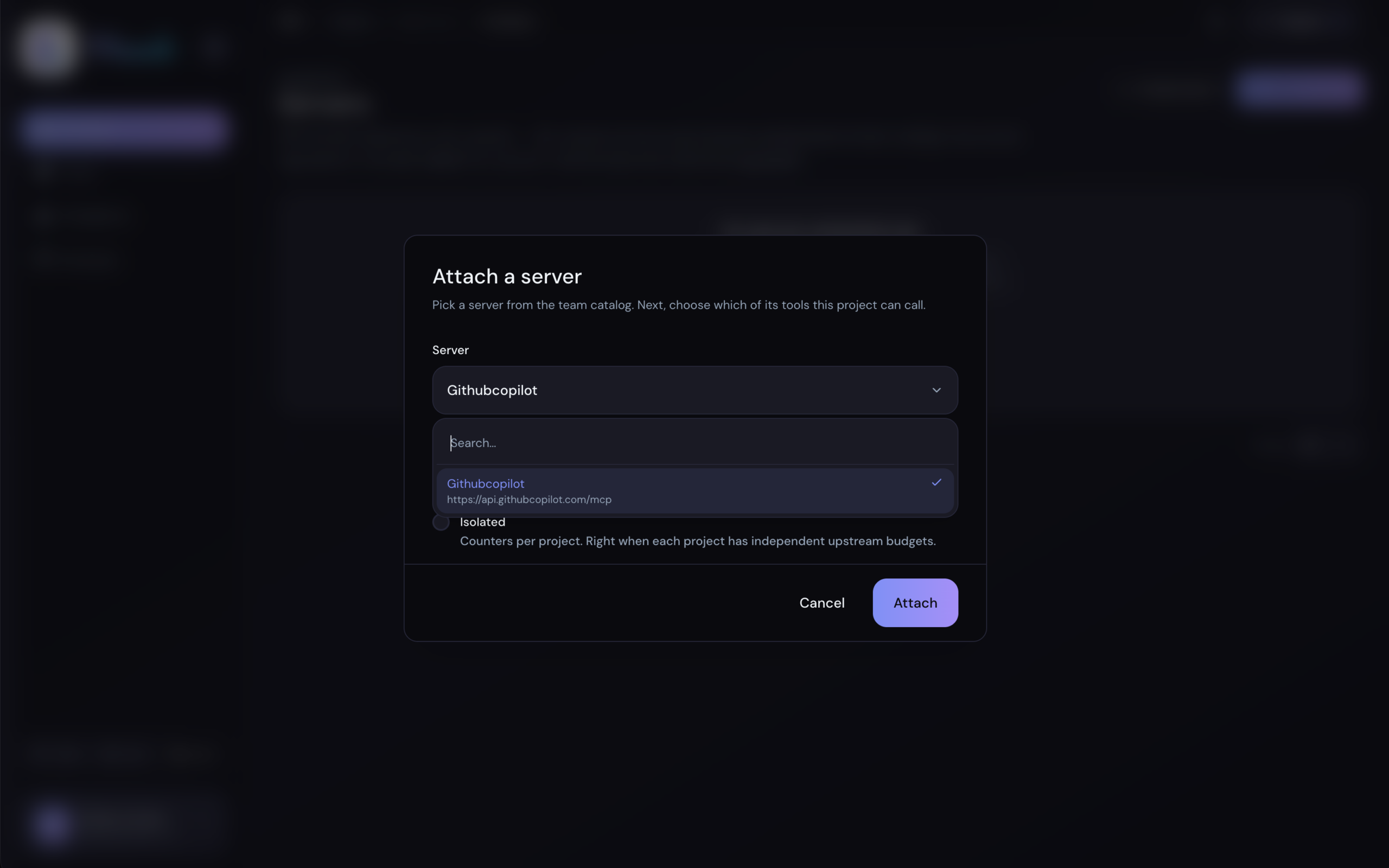
Connect
Point at a server.
Give Meandr a server's address and credentials. It checks it can reach and sign in to the server before treating it as live, so a broken connection shows up at setup — not mid-run.
You set up: the server endpoint and how Meandr signs in to it.
Discover
Meandr reads the menu.
Meandr automatically discovers the tools the server offers and keeps that up to date — on a schedule and when the server signals a change. No re-importing by hand every time something moves.
You set up: nothing — discovery and refresh are automatic.
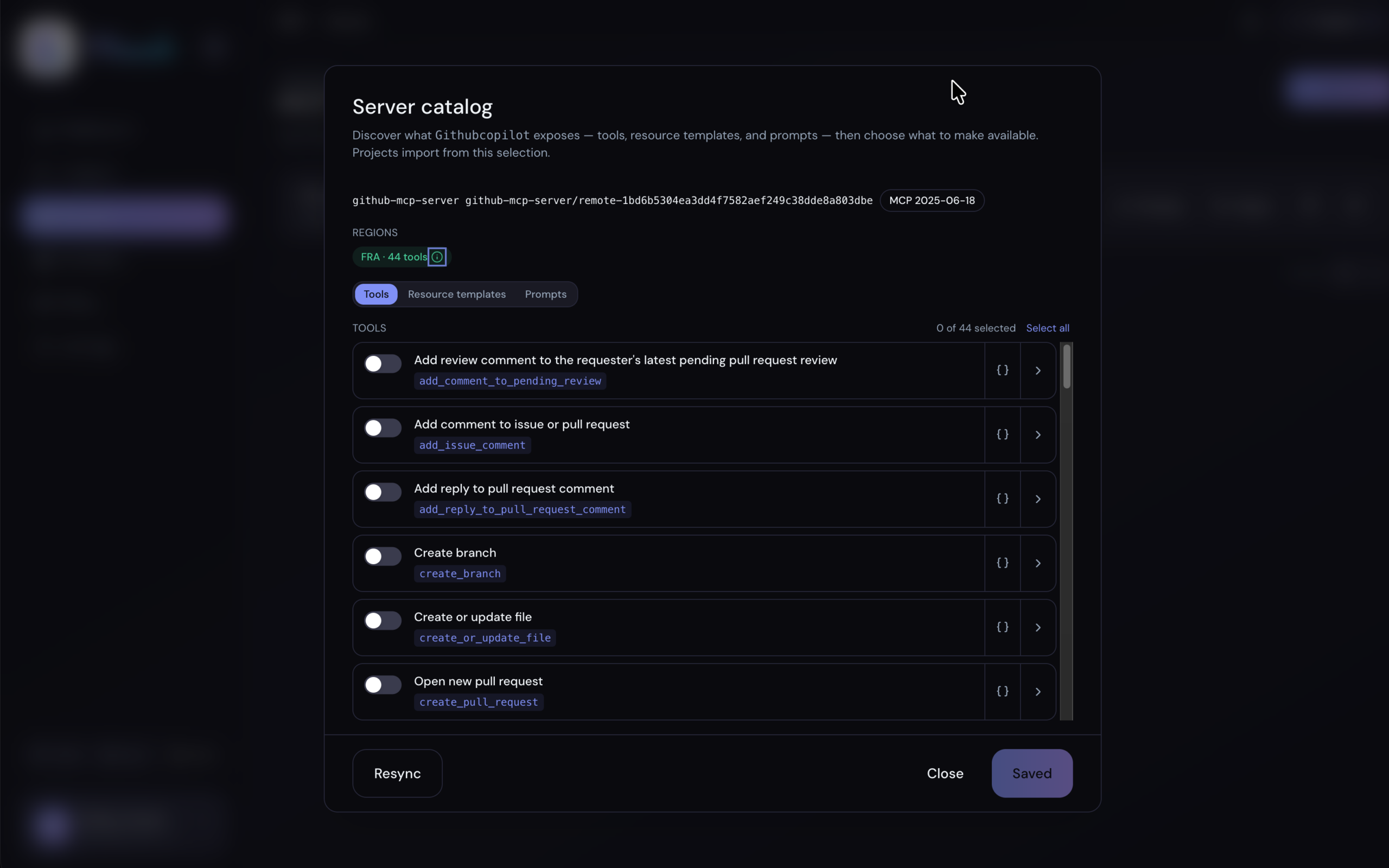
Curate
You pick what ships.
You pick which tools reach your agents and set their rules. When a server declares a tool read-only or destructive, Meandr surfaces that to help you decide. Nothing reaches an agent until you've let it into the catalog.
You set up: which tools agents can see, and their starting rules.
One catalog you can actually trust.
Reachable isn't the same as exposed. Meandr keeps that line clear.
One catalog, every server
All your connected servers merge into a single list your agents see as one server — and if two servers share a tool name, Meandr flags the clash for you to resolve.
A head start on the rules
When a server declares a tool as read-only or destructive, Meandr shows it and can factor it into your rules — so you're not starting from a blank page.
Reachable ≠ exposed
Connecting a server doesn't hand its tools to your agents. Nothing shows up for an agent until you've explicitly let it into the catalog.
Stays current on its own
When an upstream server changes its tools, the catalog keeps up automatically — on a schedule and on change notifications — so you're not re-importing by hand.
Connect anything — even AWS
API keys, custom headers, basic auth, OAuth, mTLS or AWS SigV4: Meandr handles the auth for you, so an AWS-hosted MCP server connects out of the box. No sidecar, no proxy to run.
Bring your stdio MCP servers
Meandr supports them. Run one on your computer or on a machine you own, and it shows up in your dashboard like any other server, ready for any of your agents.
Questions you'd ask anyway.
Does connecting a server rename the tools my agent uses?
Do I have to re-import every time an upstream tool changes?
Does Meandr read the data behind these tools?
What if a tool's real risk isn't obvious from its name?
Can I connect AWS-hosted MCP servers?
Turn a pile of servers into one catalog you control.
Point your agent at one endpoint and you're governed in minutes — no code changes, no proxy to run.
Get startedQuestions? Email us