Resources · Guide
Write your first policy.
A policy is a list of rules. Each call your agent makes gets one answer from it — allow, deny, or require a human's approval — matched on the agent, the tool, and even the argument values.
Three ideas
Everything a policy does, in three moves.
Match
What the rule applies to.
Pick what a rule applies to: the agent, the server or tool, and — where it matters — the actual argument values, like an amount over a threshold.
Decide
What happens when it matches.
Choose the outcome: allow the call, deny it outright, or require a human's approval before it runs.
Order
Rules run top to bottom.
Your rules run in order, and the first match wins. Put your most specific rules first, and end with a catch-all.
In plain terms
A policy reads like a short, ordered list. Here's a two-rule example: hold back large refunds for a human, and let everything else through.
1. refund tool, amount > 100 → require approval
2. everything else → allow
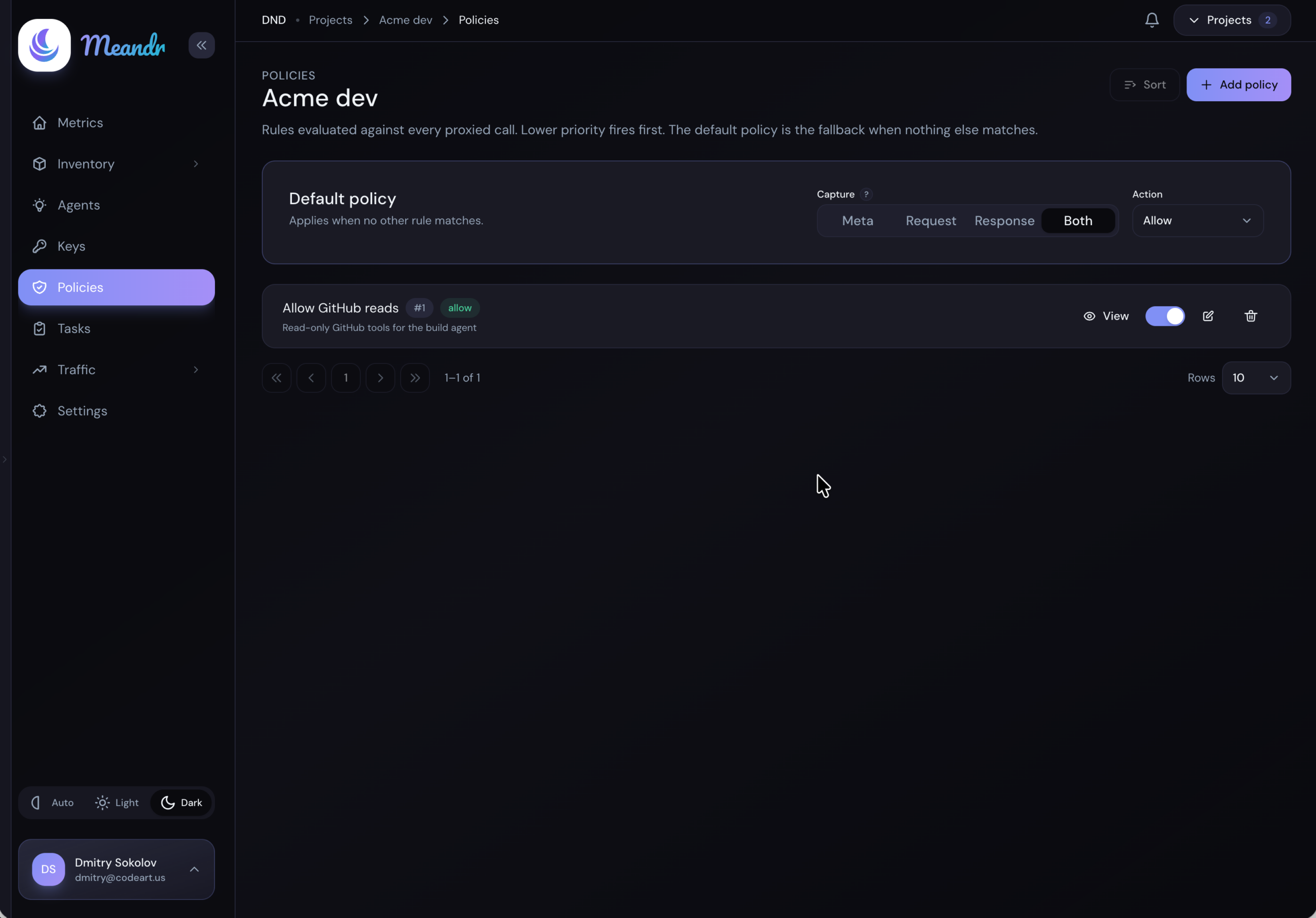
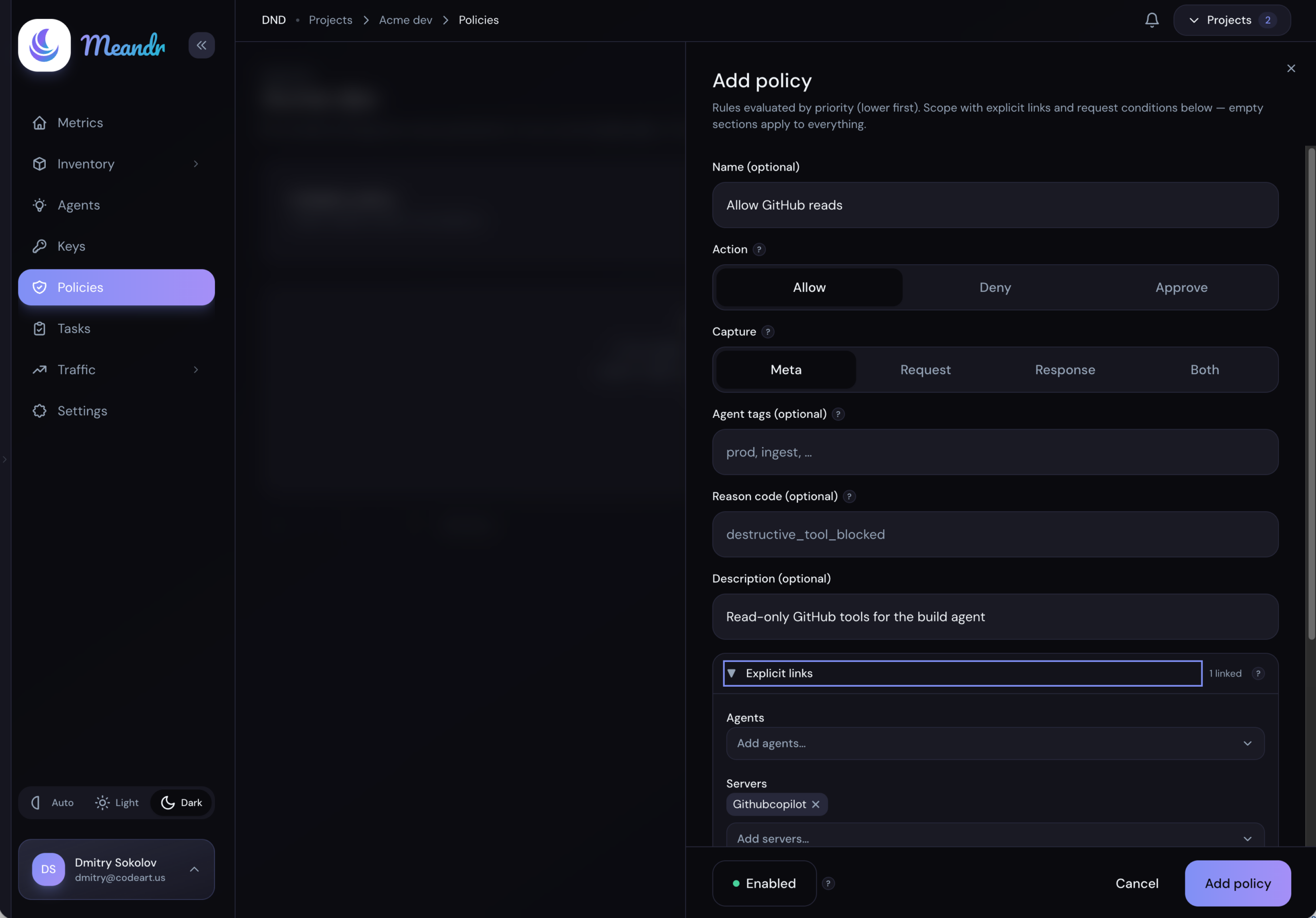
In the dashboard that rule is one dialog — Add policy. Only two fields are required; leave a section empty and it applies to everything.
| Field | What it does |
|---|---|
| Name | For humans — "Allow GitHub reads" beats an id when you're scanning the list later. |
| Action | Allow, Deny or Approve — the verdict when this rule matches. |
| Capture | How much of the call to keep: Meta (who/what/when), Request, Response, or Both. Set per rule, so you keep payloads only where you actually need them. |
| Agent tags | Limit the rule to agents carrying these tags. Empty means every agent. |
| Reason code | A short machine-readable label that travels with the decision — handy when you're reading the audit trail. |
| Description | Why the rule exists and who owns it. Future you will be grateful. |
| Explicit links | Narrow the rule to specific agents, servers, tools, prompts or resource templates. Leave a list empty and it covers all of them — so linking just the server keeps the rule working as you import more of its tools. |
| Request conditions | Match on the call itself — argument values by path ($.amount, $.user.email, or just amount) with an operator: eq, neq, gt, gte, lt, lte, matches, contains, in, exists. |
Order matters. Rules are evaluated by priority, lowest first, and the first match decides the call — so put your specific exceptions above the broad rules, and let the project default catch whatever falls through.
When a rule says "require approval."
The call pauses mid-flight and waits for a person. Deny it, or let it time out, and it never runs — either way the decision is logged against the rule that asked for it.
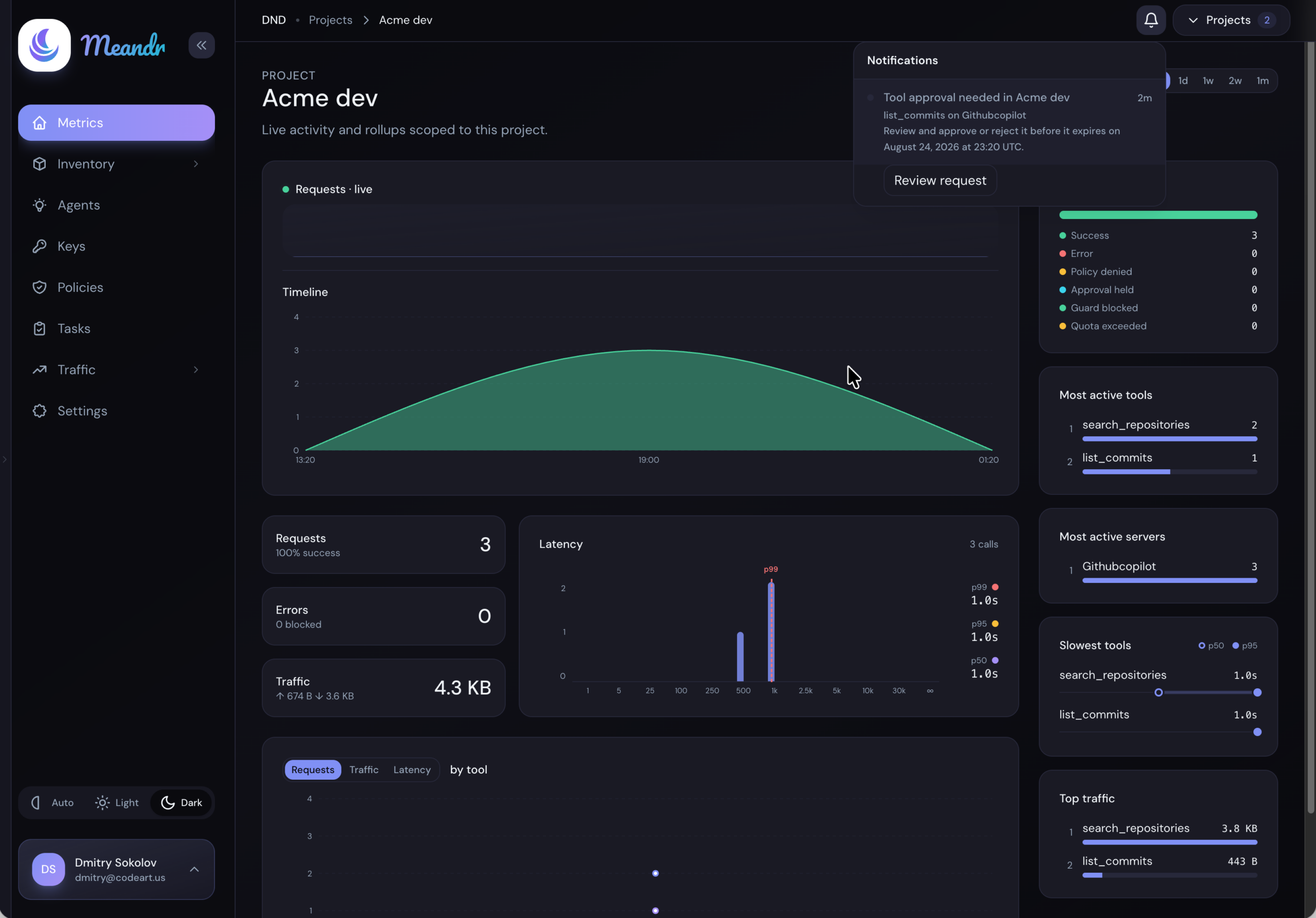
You get pinged. A notification appears in the top bar with a Review button — no need to sit watching the dashboard.
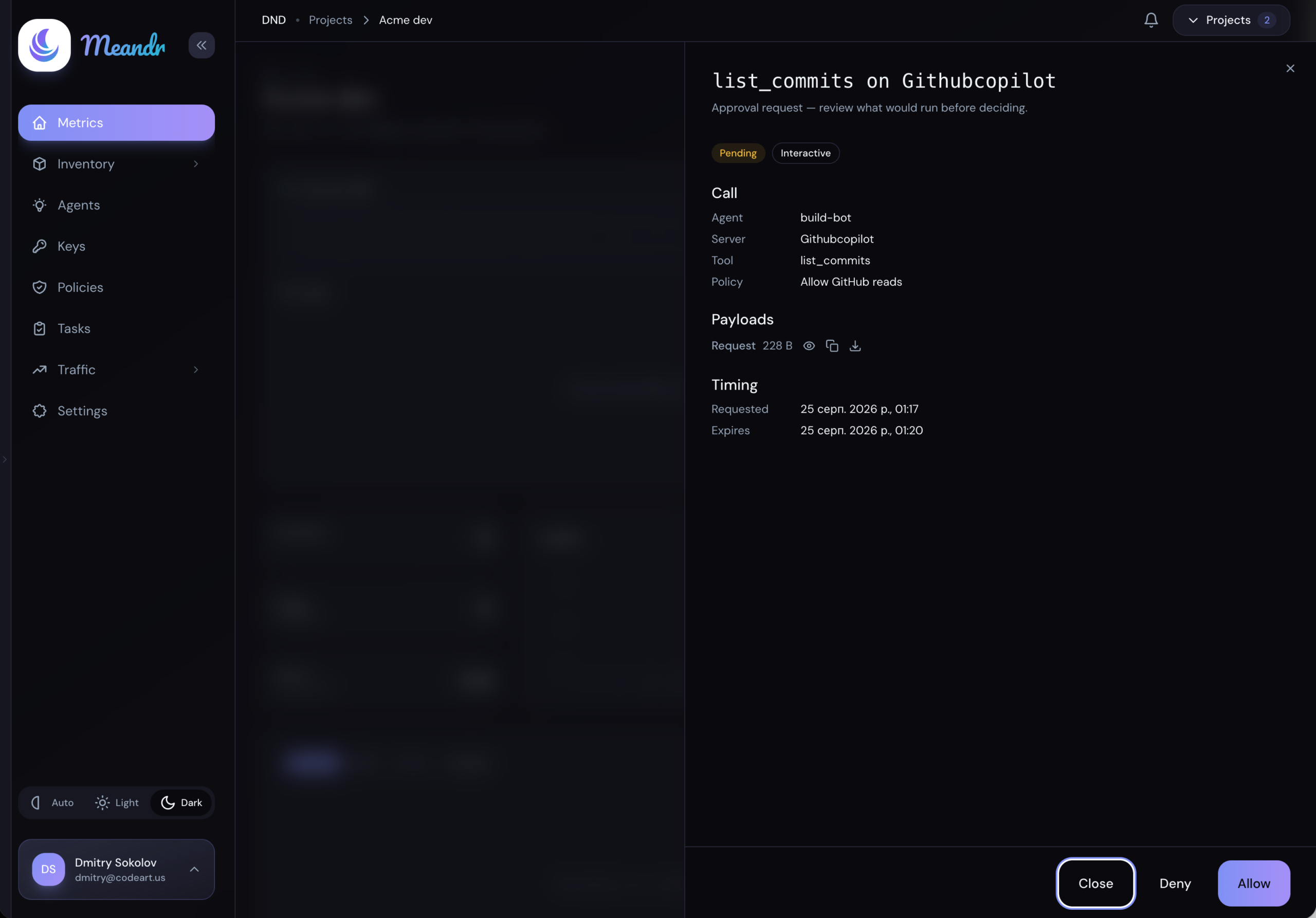
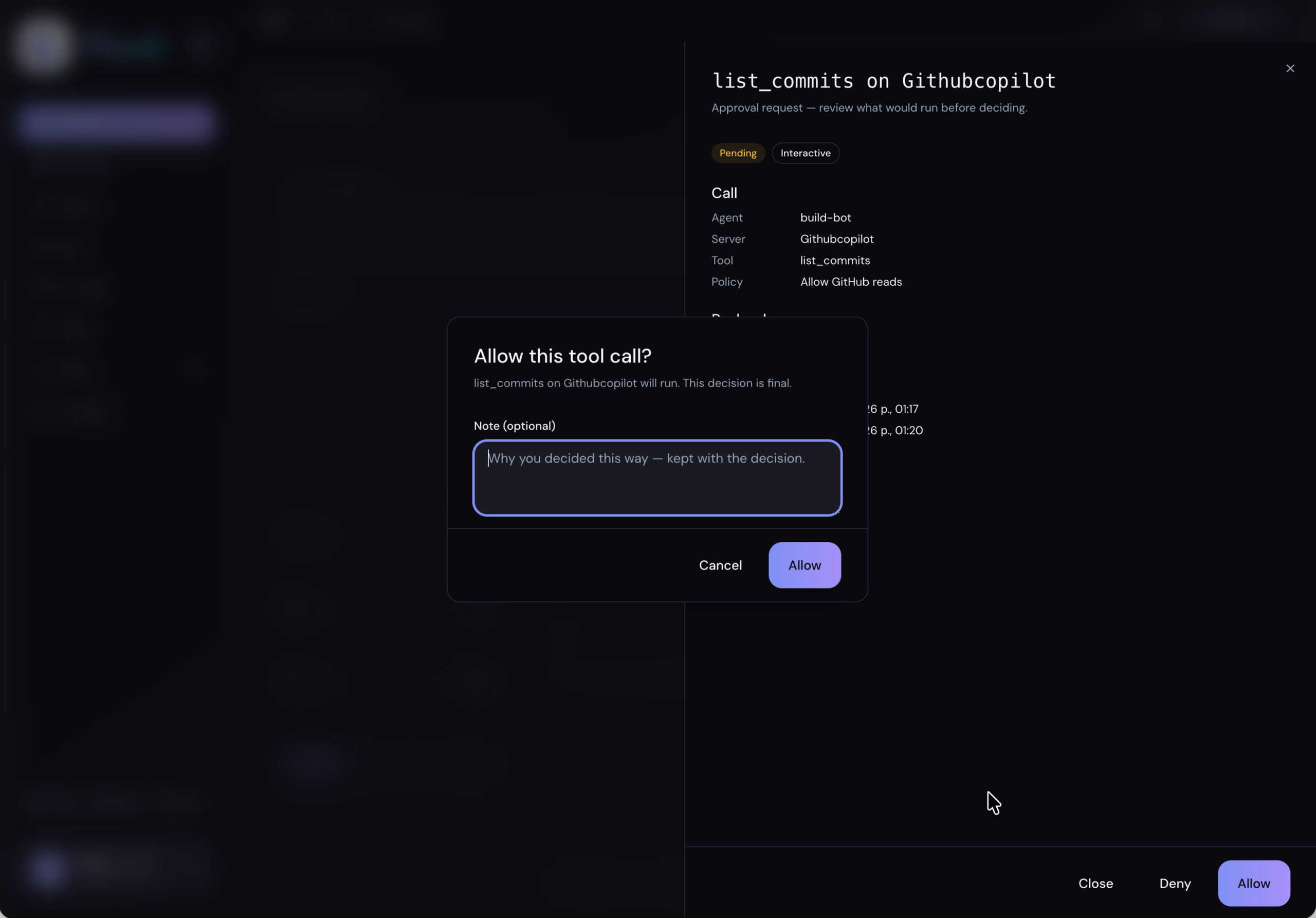
You see what's being asked. Review opens a panel with the call itself — which agent, which tool, and the arguments it wants to run with.
You confirm. Allow asks once more — naming the tool and the server it will run against, and warning that the decision is final. Approve and the call runs exactly as the agent asked; deny and it never does.
Next steps
Connect a tool server
Add the MCP servers your agents should reach, and choose how Meandr signs in to each.
Quickstart
Connect your first agent to Meandr in three steps — no SDK, no code changes.
That's the core of governance.
Point your agent at one endpoint and you're governed in minutes — no code changes, no proxy to run.
Get startedQuestions? Email us